Key Takeaways
Preparing your financial documentation correctly is the most important step to ensure your loan application moves smoothly. By organizing these records ahead of time, you remove potential delays in your approval timeline.
- Collate all original academic certificates and proof of your university admission.
- Maintain organized records of your KYC and valid identity identification.
- Gather comprehensive income proofs for both the applicant and co-applicant.
- Prepare collateral documentation if opting for a secured loan structure.
- Consult professional advisors to finalize the specific list of documents for your lender.
Academic records for your application
Your academic profile serves as the foundation for your loan application. Banks evaluate these documents to ensure you have the necessary credentials to succeed in your chosen program while financing your academic journey abroad.
Letters of admission from the international university
This letter is the central proof of your enrollment. It must clearly state the program name, duration, and the start date of your course.
Academic marksheets and certificates of completion
Having the right documents ready makes the process easier. You will typically need to provide these essential academic records to verify your background:
- Secondary school leaving certificate and final marksheet
- Undergraduate degree certificates or provisional letters
- Semester-wise transcripts for all completed university years
- English proficiency test score reports like IELTS or TOEFL
Properly organizing these transcripts helps banks assess your profile quickly.
Standardized test scores and entrance exam results
Scores from exams like the GRE, GMAT, or SAT are often integrated into the financial evaluation to demonstrate academic readiness. Keep all official scorecards valid and accessible.
Scholarship and grant award letters
If you have secured a scholarship, include the formal award letter immediately. These funds decrease the total loan amount required and can positively influence the bank’s decision on your application.
Personal identity and KYC documentation
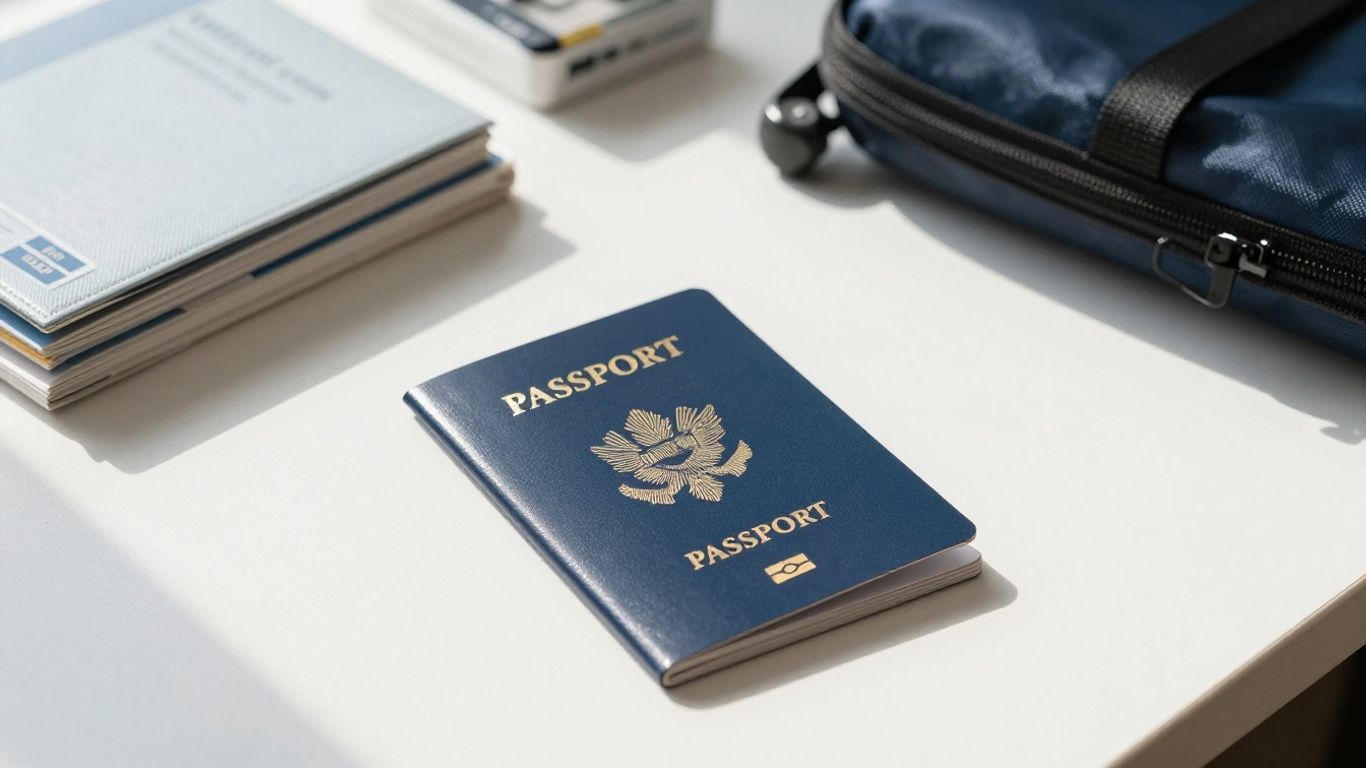
Establishing your personal identity is a mandatory regulatory requirement for all financial institutions. Gateway International handles this process by ensuring your documentation meets all compliance standards for your specific study destination.
Passport copies and visa documentation
Your passport must be valid for at least six months beyond your course completion date. Including a copy of your initial visa support documents strengthens your proof of travel intent.
Valid government-issued photo identification
Government IDs like a driver’s license or voter registration serve as secondary verification. Ensure the name and date of birth on these documents match your passport details perfectly.
Primary address and residency proof
Banks require confirmation of your permanent residency. Utility bills, such as electricity or water statements, or registered rental agreements are accepted as definitive proof of your address.
Recent passport-size photographs of the applicant
Keep several high-quality, professional photographs handy. These are frequently required for various bank application forms and internal profile documents.
Education loan documents required for financial assessment
Assessing your financial background allows the lender to understand your repayment capacity. You should proactively gather the education loan documents required to keep your processing time to a absolute minimum.
Bank account statements for the previous six to twelve months
Lenders need to see a stable financial history, and maintaining clean, active bank statements is essential for a smooth process. The table below highlights the key focus areas lenders watch for during this review:
| Category | Document Type | Purpose |
|---|---|---|
| Liquidity | Primary Savings Account | Verify available cash on hand |
| Stability | Income Account | Confirm recurring sources of funds |
| Activity | Loan Repayment Record | Check existing debt behaviors |
Maintaining these accounts in good order ensures that the underwriting team can verify your eligibility without repetitive follow-up requests.
Details of existing financial obligations or current loans
Transparency regarding existing debt is vital. Disclose all open lines of credit, previous education loans, or active personal loans to help the bank calculate your debt-to-income ratio.
Proof of liquid family savings or fixed deposits
Liquid assets act as a safety net for lenders during the moratorium period. Providing statements for fixed deposits or certificates of investment demonstrates your financial preparedness for the journey.
Verification of alternative financial assets
Consider sharing details of bonds, mutual funds, or other investment portfolios if your primary savings are not sufficient for the total cost of study. These assets provide additional security for the bank.
Co-applicant financial and income records
Since most international loans require a co-borrower, Gateway International coordinates with your co-applicant to organize all necessary income documentation. A clear set of records reduces the likelihood of manual intervention during the bank’s vetting phase.
Recent salary slips for the last three months
Salary slips reflect your current earning standard. These documents are used to verify the consistency of income and the legitimacy of your employment status.
Form 16 and income tax returns for the past three years
Consistent filing of tax returns proves financial discipline. Submit these to validate your income levels and fulfill mandatory regulatory reporting standards for the lender.
Employment verification and official appointment letters
An official appointment letter confirms the terms of your role or business activity. This helps the bank establish long-term financial security for the loan repayment period.
Bank account statements for salary or business income
Just like the student applicant, the co-applicant must provide clear bank statements. Gateway International ensures these align with the income figures reported in your tax documents.
Property and collateral documentation
Secured loans rely heavily on the valuation of tangible assets. Proactive preparation of these documents makes Gateway International Loan experts more efficient in negotiating your loan terms.
Original property title deeds and registration papers
Original documents remain the legal proof of asset ownership. Ensure that the title deed clearly indicates all current owners to avoid legal delays during the collateralization process.
Official valuation certificate from bank-approved sources
Lenders often require a valuation from their own panel of architects or chartered engineers. Providing existing valuation reports can speed up their initial assessment of your collateral’s value.
No-objection certificate for collateral security
If the property is partially mortgaged or held by an entity, an NOC might be necessary. This document confirms that the current holders allow the property to be used as collateral for your new loan.
Records of recent property tax payments and assessments
Recent tax receipts serve as proof that the property is legally compliant and free from financial liabilities. Always include the most recent payment statement in your folder.
University-specific academic requirements
Every institution has unique financial demands. You must align your loan documents to match the specific costs outlined by your target university.
Official breakdown of tuition and annual university fees
This breakdown is crucial for determining your total funding gap. Ensure it matches the figures stated in your official admission invoice.
Documentation of mandatory health insurance coverage
Many countries require students to purchase specific health insurance plans. Keep these policy details ready to demonstrate that you have accounted for these mandatory living expenses.
Estimated cost of living statement provided by the institution
Institutions provide guidelines on expected monthly costs for food, transport, and local utilities. Having this official statement helps the bank justify the total loan amount requested.
Letters of recommendation and academic references
While primary academic records are technical, recommendation letters provide context. Some lenders prefer to see these as part of a comprehensive application folder to verify the student’s genuine interest and commitment.
Conclusion
Successfully managing your document gathering process turns a daunting task into a simple, efficient experience. By staying organized and following the requirements provided by your lender, you keep your path clear for finalizing your international education. Gateway International remains committed to supporting you through each phase of this journey, ensuring that your paperwork never hinders your academic goals.
Frequently Asked Questions
Is it possible to apply for a loan without all these documents?
Most lenders require a complete documentation set to process a loan; submitting partial information often leads to significant delays or immediate rejection of the file.
How long should I keep copies of my loan documents?
It is strongly advised to maintain original documents and digital copies throughout the entire tenure of your loan, including the full repayment period after you graduate.
Can I submit photocopies instead of original documents?
While digital copies are often accepted for initial verification, banks invariably require you to present the original documents at the branch to finalize the loan agreement.
Do co-applicant documents always carry the same weight as the student’s?
Lenders assess the student’s profile for future earning potential while the co-applicant’s income records are used to verify the current capacity to pay interest during the course period.
Should I have my documents notarized before submission?
Notarization requirements vary from bank to bank, so it is best to verify with your specific loan officer before spending time and money on legal attestations.
What if I am self-employed instead of a salaried professional?
Self-employed individuals simply provide alternative records, such as business registration certificates, profit and loss statements, and audited balance sheets instead of standard salary slips.
Can I add more documentation after the initial submission?
While adding information is possible if requested by the underwriter, it is always better to submit a comprehensive and accurate set of documents from the start to prevent delays.